
Amid fears of an AI bubble, these advancements in AI infrastructure are concrete engineering wins and will form the basis of a sustainable AI-driven economy in the U.S.
In the swirling market excitement that has defined the AI era, it is natural to be concerned that investors may be inflating a bubble. Many of us who lived through dot-com mania look at Nvidia surging past a $5 trillion in market cap with a skeptical eye. One prominent voice pegged the current AI hype as 17 times larger than the dot-com boom, fueled by trillions in projected spending that may never yield commensurate returns. OpenAI's revenue forecasts tripling to $12.7 billion next year sound triumphant, but come amid warnings from firms like Ark Invest's Cathie Wood about potential market corrections. The BBC has spotlighted a "tangled web of deals" in Silicon Valley, where valuations do not match up to profits.
Yet amid these valid concerns, infrastructure advancements based on hard science and engineering are taking AI's inflated expectations and shifting them to a robust productivity engine, particularly in the United States. Innovations in both compute hardware and infrastructure software promise to address the core bottlenecks of scaling: energy-hungry data centers, memory walls that choke model performance, and supply chains vulnerable to geopolitics.
By 2030, global data centers could demand $3.7 trillion to $5.2 trillion in investments, but with U.S.-led efficiencies, this spend translates into productivity gains that could add trillions to GDP, echoing McKinsey's early projections for AI's potential.
Hardware Advancements
Today, it's widely assumed that AI's scaling challenge lies primarily with the speed and cost of chip production. For years, the U.S. has ceded ground in semiconductor manufacturing to Taiwan's TSMC and the Netherlands' ASML, whose extreme ultraviolet (EUV) lithography tools hold a near-monopoly on producing chips at the 2-3 nanometer scale essential for AI.
Enter Substrate, a San Francisco startup that emerged from stealth with an audacious claim: the ability to use particle accelerators to etch features finer than 2 nanometers, surpassing the state of the art. The new technique also costs a tenth as much as in-market solutions, costing $40 million per tool versus $400 million.
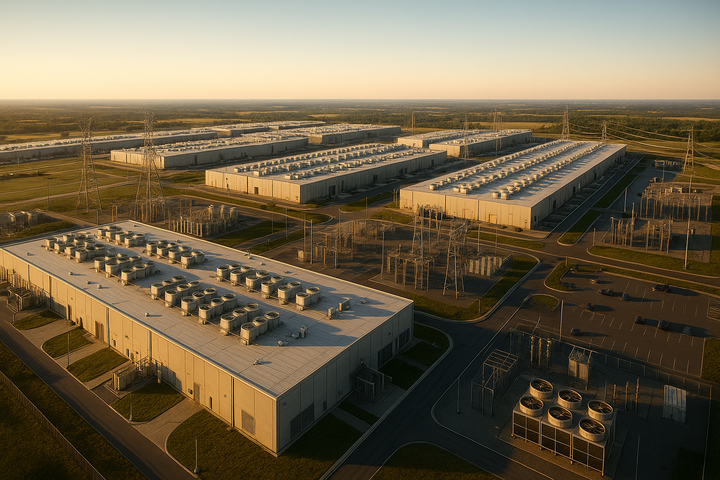
However, to compete in the global AI race, chips alone will not suffice. Data centers will form the backbone of daily productivity, and data centers are hungry — for energy, water, and real estate. Energy constraints loom large, with AI's power consumption possibly hitting 123 gigawatts in the U.S. by 2035.
Software Advancements
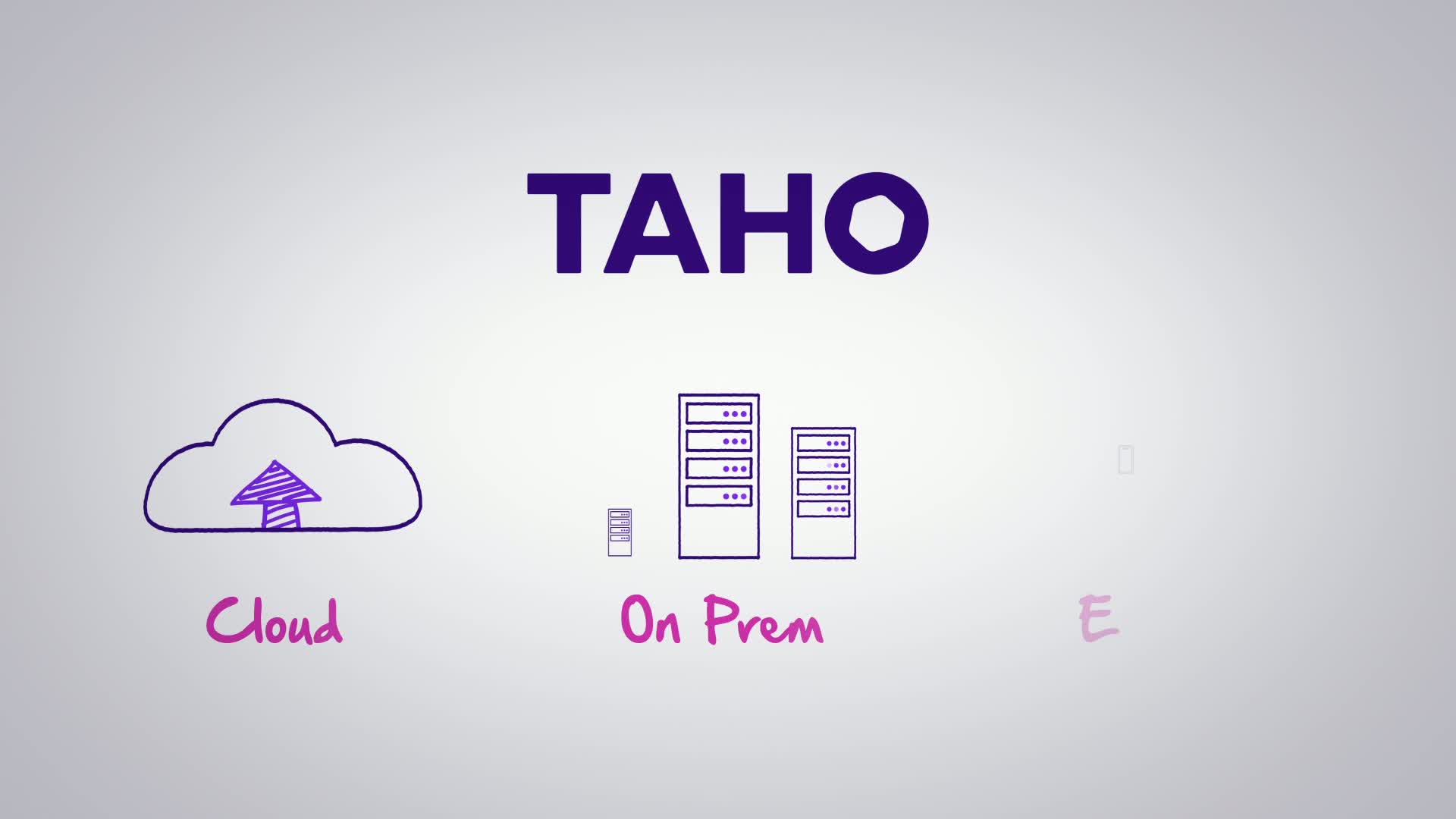
While energy and hardware provide raw potential, it is the software we run on it that ultimately decides whether we are maximizing the use of scarce compute cycles. TAHO, a stealthy infrastructure software layer that claims to increase effective compute without new hardware, could slash inference costs by 90% and launch processing jobs 30 times faster by creating a shared memory fabric across fleets.
Unlike Kubernetes, which often leaves 70% to 80% of cloud capacity idle due to orchestration overhead, suboptimal scheduling, and queuing delays, TAHO acts as a compute-efficiency layer that eliminates redundant work and cold starts, reclaiming capacity into coherent AI pipelines.
Concrete hardware and software advancements are shaping a path to sustainable growth in the AI sector, and these gains are quantifiable regardless of whether AI investment is momentarily overheated. When foundational technologies like Substrate's lithography, TAHO's efficiency alchemy, and others are combined, trillion-token models that don't fry the grid become practical — leading to AI abundance that will improve the quality of life for all.
For more, follow Dave Birnbaum @ contrarymo on X.