
Every AI team eventually hits the same wall:
You can distribute code with Git. But distributing models, datasets, and build artifacts still feels like passing around hard drives—bucket links, mutable "latest" paths, and repeated downloads. Then, when you finally have the right bits on the right machine, inference often wants a single box with a single GPU that fits everything.
TAHO's newest foundation is built to remove both constraints:
Content Exchange turns large artifacts into content-addressed objects—publish once, fetch anywhere, verify what you fetched, and reuse it across machines. That's .ONCE™.
Piranha turns inference into a distributed computation that runs across a network of nodes, streaming results back in real time.
This post explains what changed, why it matters, and how it maps to familiar industry patterns (IPFS/Git/DVC for content addressing, and standard sharding/model-parallel ideas for distributed inference).
The Two Frictions That Slow Distributed AI
Artifact Friction: "Which version is this?"
On a typical team, model rollouts and evaluation runs involve a storage path (bucket + object key), a naming convention for "versioning," and—if you're disciplined—checksum verification. But location-based naming makes it easy to point to "something," not necessarily the exact bytes you intended, especially when objects are overwritten or "latest" drifts.
Hardware Friction: "The model doesn't fit."
As models scale, memory pressure comes from weights and runtime state (like KV cache). The default advice is "get a bigger GPU" or "shard across GPUs in one server." But many teams have capacity across machines—not inside one—and they need a runtime that treats the cluster as the unit of computation.
Content Exchange and .ONCE™
Content Exchange applies a concept engineers already trust: content-addressable storage.
When you publish a file, Content Exchange returns a Content ID—a fingerprint of the file's bytes. If the bytes change, the ID changes. If the ID matches, the content matches.
That's the same foundational idea behind:
- IPFS content identifiers (CIDs), which label content without implying where it's stored.
- Git objects, where Git is explicitly a "content-addressable filesystem."
- DVC, whose cache is a content-addressable store that creates indirection between "named files" and "content identity."
Why Content IDs Beat Paths for Distributed Reuse
A path is a name you assign. A content ID is identity. That distinction enables three operational properties:
- Version semantics you can trust: if two people share an ID, they share the same bytes.
- Verified retrieval: on fetch, content can be verified against the ID to detect corruption or tampering.
- Reuse across nodes: any node that already has the content can serve it, enabling safe caching across machines.
.ONCE™ in One Sentence
.ONCE™ is the practical outcome: publish a file once, then reuse the same verified file across machines by sharing its Content ID.
Compatibility Note for Decision-Makers
This is not necessarily a "rip and replace" for S3 or artifact repositories: object storage is keyed by names, while Content Exchange emphasizes reuse-by-ID workflows across machines.
Piranha and Distributed Inference
Once artifacts are portable by ID, the next step is making computation portable too.
Piranha is TAHO's distributed inference system: it breaks large models into pieces and runs them across a network of nodes, coordinating work automatically and streaming results back in real time.
To situate that in industry terms: sharding and model-parallel techniques exist because model scale quickly hits single-device memory limits. Megatron-LM is a canonical example of model-parallel transformer work under memory constraints. And on the inference side, Hugging Face Text Generation Inference (TGI) explicitly "performs sharding to provide tensor parallelism."
TAHO's move is to extend the "shard for tractability" idea from "multiple GPUs" to "multiple nodes," so the cluster becomes the unit of inference.
Streaming-First, Not Streaming-Later
Streaming is built into the system: tokens appear as they're generated, and the UI is directly connected to the distributed pipeline. This matters because it changes inference from "submit job → wait" into an interactive system you can observe and steer.
Architecture at a Glance
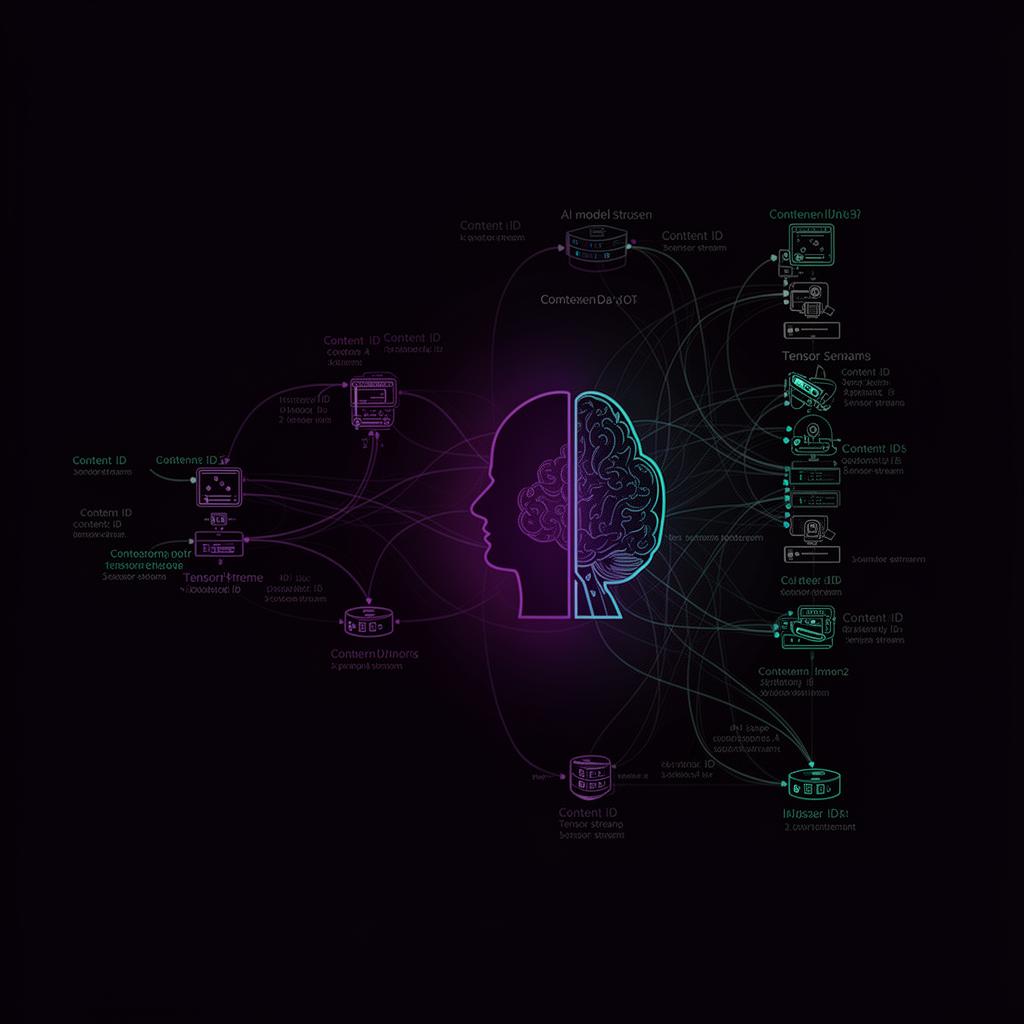
Here's the conceptual coupling that makes the story coherent: Content Exchange (stable artifact identity) + Piranha (distributed execution) inside a streaming-first runtime.
The TAHO Serial Engine brings these layers together:
- Clients connect via an OpenAI-compatible API
- Execution Nodes form a cluster spanning cloud, edge, and browser environments
- Content Exchange (.ONCE™) provides Content IDs, verification, and reuse
- Piranha Distributed Inference handles model sharding across nodes
- Tensor Transport Layer manages intermediate tensor movement between nodes
- EONNX Model Format enables streamable, modular model representations
- TUI + Browser Console provide live observability into the distributed system
The Content Flow
This is the .ONCE™ workflow, made explicit as an engineering flow:
- Publish artifact (model, dataset, or build output)
- Content ID returned (a fingerprint of the bytes)
- Share the ID (via chat, CI, or config—not a mutable path)
- Fetch by Content ID from any node that has it
- Verify bytes match ID (detect corruption or tampering)
- Cache and reuse across machines automatically
A Concrete Workflow Example
Imagine you're rolling out a 20–40 GB model across a small evaluation cluster.
Publish once. You publish a checkpoint (or dataset) and receive a Content ID.
Share the ID, not the path. You send the Content ID to a teammate or CI job. Nobody needs to know where the file "lives."
Fetch anywhere (verified). Each node fetches by Content ID; the content is verified against the ID; repeated runs benefit from reuse and caching.
Run distributed inference. Piranha schedules shards across nodes and streams tokens back to the caller in real time.
Repeat without "wrong version" incidents. If you run the same eval tomorrow, the ID is identical because the bytes are identical—and if the bytes changed, you get a new ID. That's the safety property content-addressing gives you.
What This Enables for Teams
Faster iteration on models and data. Stable-by-ID artifacts reduce version ambiguity and wasted transfers during experimentation and rollouts.
Models larger than a single box. Distributed inference shifts the practical ceiling from "biggest GPU" toward "available cluster," aligning with the broader model-parallel direction of the field.
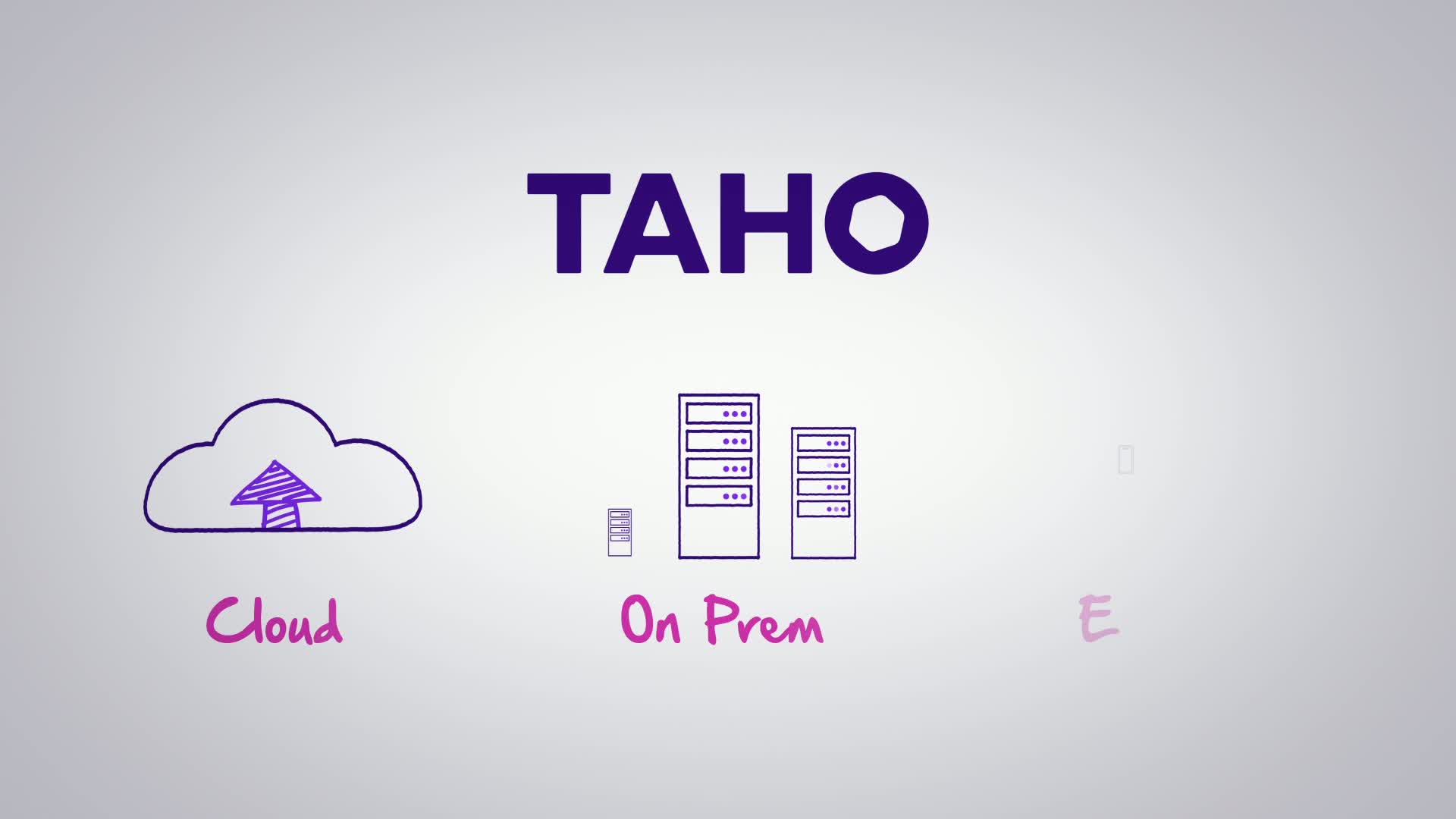
Run anywhere (cloud, on-prem, native, browser). The Serial Engine is designed to run on cloud providers, on-prem (e.g., Proxmox), native binaries, and in-browser via WASM.
Observability that matches distributed reality. TAHO includes both a terminal UI and browser console with live node views, logs, and resource visibility—an explicit response to the "distributed systems are invisible" problem.
Low-friction adoption. An OpenAI-compatible API is a pragmatic integration surface for existing tools and apps.
Try It as a Small Pilot
A clean evaluation plan:
- Run a 2–5 node pilot with two representative artifacts (one small, one large).
- Publish once; fetch by ID across nodes; measure reuse speed and operational simplicity.
- Then, layer in Piranha distributed inference for a model that's painful to run on a single machine.
- Evaluate the end-to-end experience: time-to-first-token, stability, and operational clarity.